Feature one
Showcase 3 / 3
Democracy in menu planning at a restaurant
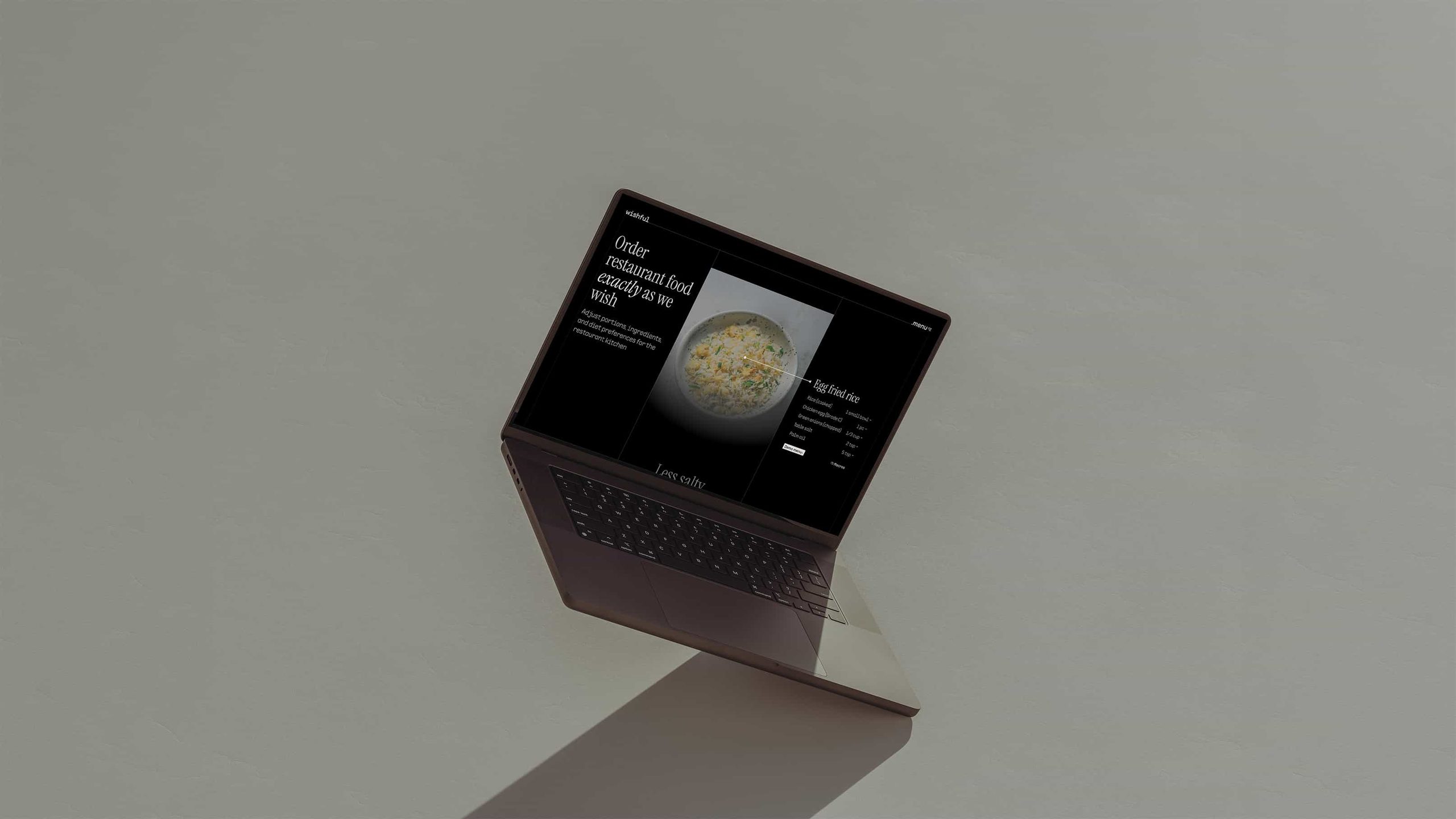
Summary
A portion-aware menu planning and ordering terminal supports a hybrid restaurant and diet clinic. Dieticians can plan menus and demonstrate what a meal looks like at a specific portion size. Customers then practise that skill in context by ordering from a menu the kitchen can execute consistently, while still protecting restaurant margins.
Background
Problem
Ecosystem map: Nutrition education and restaurant ordering operate in silos, so counselling rarely translates into portion-aware, consistent customisation at the point of sale.
Nutrition education gap
Typically, dietitians simplify meal planning with portion sizes, but clients often struggle to apply it in real contexts such as at restaurants, at groceries and at home. Serving-size labels are often vague and rarely show how they translate into day-to-day decisions, which makes "knowing" feel disconnected from "doing."
Restaurant operation in silo
Meanwhile, restaurants rarely provide accurate nutrition information. Customisation is common, but it is usually driven by operational or commercial incentives, not nutrition, so portions become inconsistent and nutrient intake becomes unpredictable. Operationally, they do depend on standard recipes, portion control, and modifications as they affect the cost.
Bridging the worlds
Nutrition guidance needs to be built into the ordering process, so clients can use it while choosing and customising a meal. A portion-aware POS can translate nutrition education into concrete portioning and ingredient choices, while keeping orders consistent and structured enough for the kitchen to execute and profitable enough to sustain.
Product concept
A menu planning and ordering system spans three touchpoints: a marketing landing page, a portion-aware ordering terminal, and a menu planner for dietitians:
Feature two
Portion-aware ordering terminal
Feature three
Menu planner
Conclusion
This concept turns nutrition education into a real-world skill: customers learn by ordering with portion guidance embedded into the flow. By connecting the dietitian's logic to the terminal and kitchen workflow, "healthy eating" feels easy and practical: clearer choices, more consistent portions, and more measurable outcomes.